Babylights, balayage and airtouch: differences and when to use each
Compares the decisions behind each technique and how to choose based on the hair, the design and the maintenance you want.
Choosing a lightening technique starts with the diagnosis and the result you are after. Babylights, balayage, airtouch and foilyage organize selection and application in different ways and can be combined within a single service.
Babylights: fine selection and light distribution
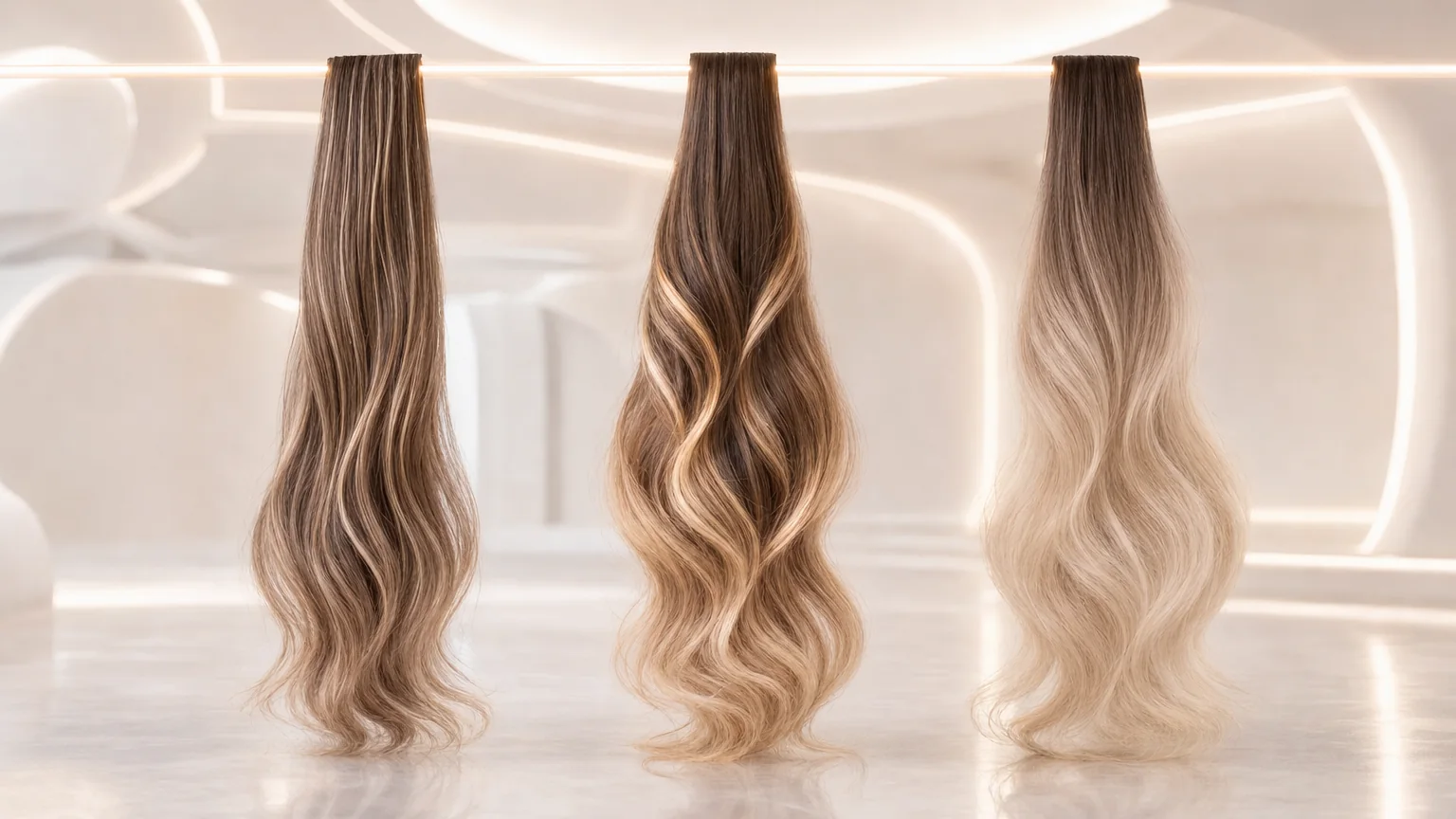
What defines babylights is the thickness of the section. You take very fine strands and separate them with little distance between one and the next, usually on foil or film so the product stays contained and the lift is even from root to ends. The result is a soft lightening with no blocks of color, close to what the sun does naturally.
That precision costs time. The finer and closer the section, the more passes you need, and appointment length varies with density, length, design and protocol. It can aim for a soft blend; the transition and visible regrowth depend on the base, the contrast and the application.
Balayage: the free gesture and saturation
In balayage you paint freehand, without foil, with a brush or a paddle, and you decide saturation through pressure and the amount of product. The usual approach is to load more toward the mids and ends and leave the root almost untouched, which gives a soft gradation. With no barrier, the product blurs at the edges and the work gains movement.
Control depends on your hand. With no foil, you have to watch the contact area with neighboring sections and the direction of the stroke. It is quick to apply and easy to maintain, but less uniform than fine highlights.
Airtouch and foilyage: hair selection and isolation
Airtouch starts from a different step: with the blow dryer you separate the shorter hair and leave the longer hair, so only what stays in your hand is lightened. The product is then applied to those strands, with or without foil, depending on the level of lift you want. Airtouch highlights are known for a very blended root, because the short hair at the top is removed before application.
Foilyage combines both ways of working: you paint as in a balayage, then wrap the strand in foil. You keep the free gesture and gain containment, which usually makes it easier to get more lift on the strands that need it, without product spreading into the next section.
Comparison table of the three techniques
| Aspect | Babylights | Balayage | Airtouch |
|---|---|---|---|
| Sectioning | Very fine and very close together | Variable, you set it as you paint | Strands chosen with the dryer |
| Foil | Yes, almost always | No, freehand | With or without foil |
| Placement | Whole head, root to ends | Mids and ends | Lengths and ends, with a blended root |
| Saturation | Depends on the product, the goal and the application protocol | Increasing toward the ends | Moderate, controlled strand by strand |
| Maintenance | Regrowth barely visible | Very soft regrowth | Soft regrowth |
| Working time | Varies with density, length, design and protocol | Varies with density, length, design and protocol | Varies with density, length, design and protocol |
Babylights vs balayage: when to suggest each technique
Assess the base, the contrast you want, how the light is distributed and the upkeep before choosing the technique. If she asks for a visible gradation, with sun-lightened hair and few visits to the salon, balayage fits better. When you are torn between babylights vs balayage, ask yourself how much appointment time you have and how much control you want over the section.
Airtouch makes sense when you want to separate the long strands cleanly and reduce the presence of the root, for example on very dense hair. Save foilyage for cases where balayage does not reach the level of lift you need and you want to keep the painted effect.
Questions that help you choose
- How often will she come back to the salon?
- What level of contrast does she want between root and ends?
- How much appointment time can you dedicate?
- How dense and how long is the hair?
How to combine babylights, balayage and airtouch in one service
The techniques do not exclude each other. A common pattern is to work the face frame and root with fine highlights, so the light stays soft around the face, then move to balayage on the mids and ends, where you want more saturation and movement. With airtouch you can separate the lengths before applying and be clear on which strands go in each zone.
In FUSION TECH you can practice combining IRIS with other lightening techniques within a single service.
If you want to rehearse the distribution before picking up the brush, the IRIS Design simulator lets you combine patterns, paths and separations on a section of hair. It is a visual representation of the application and does not predict the final color result, but it helps you think through the separation between strands. And to see how light and depth are distributed in a finished job, there are results and processes with IRIS.
If you work with selective application, IRIS CONNECT holds up to 160 g of prepared product and its parting thimble controls the section and the thickness of the stroke, two decisions that shape babylights and any other fine highlights.
Frequently asked questions
What is the difference between balayage and babylights?
Babylights use very fine, closely spaced sections, usually with foil, and aim for even light from root to ends. Balayage is painted freehand, concentrates the product on the mids and ends and leaves a more defined gradation.
Are airtouch highlights always done without foil?
No. After separating the hair with the dryer you can apply the product with or without foil. It depends on the level of lift you need and how much control you want over contact between strands.
Can you do babylights and balayage in the same appointment?
Yes. They are usually split by zone: fine highlights where you want soft light and balayage where you want more saturation. Plan the sectioning beforehand so the result looks coherent.