Highlighting comb and other methods: when to use each one
Comb highlights, foils, freehand and a selective applicator: what each highlighting method solves, where it falls short and when to choose it.
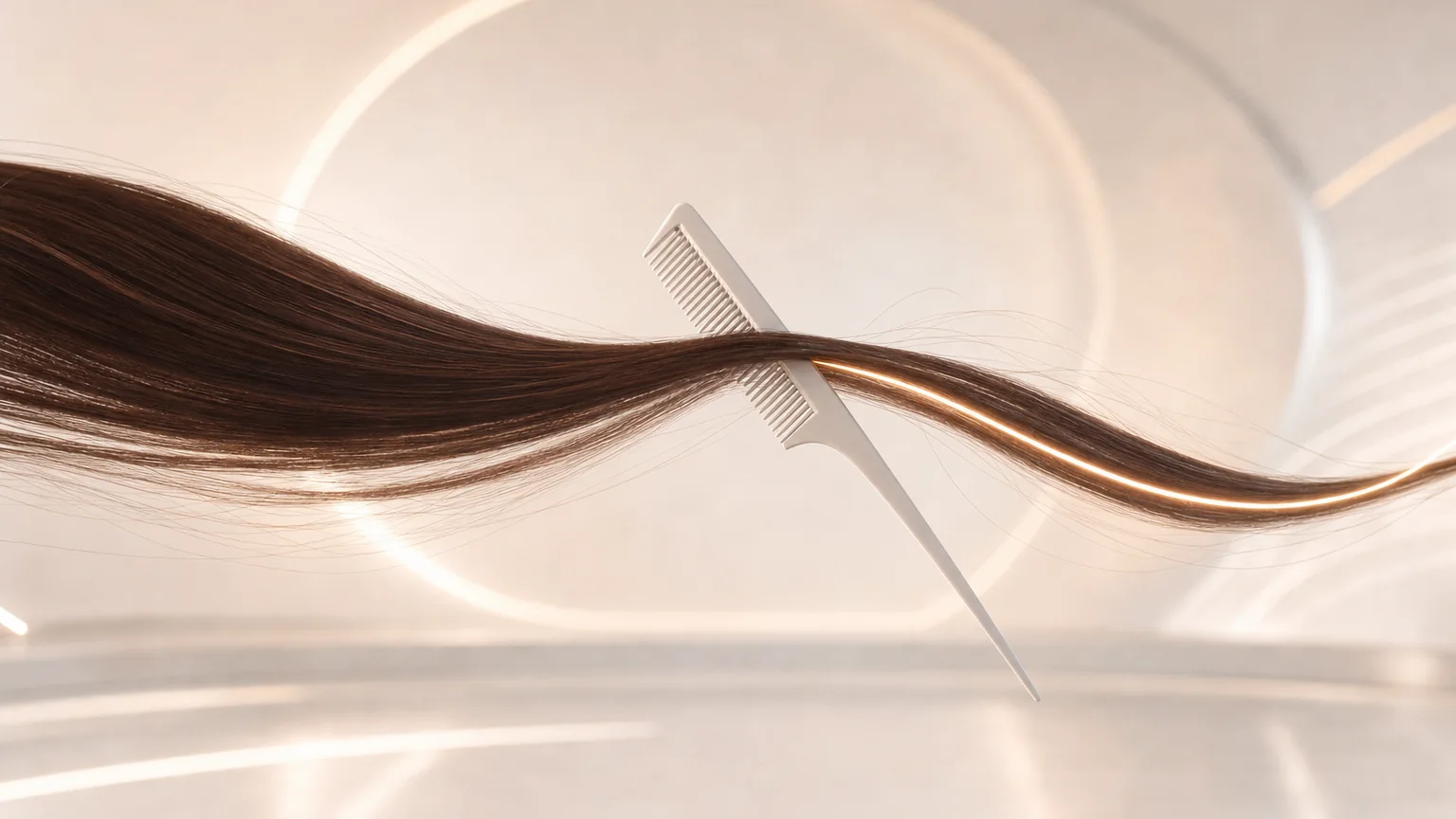
A highlighting comb lets you take the section with the comb itself and lay the product on it while you hold it, without wrapping it. Comb highlights are a fast way to work and leave plenty of room for freehand judgment, but the choice of hair, the product and how well you control the movement all affect how precise the application is. In this article we compare that technique with the other common ways of doing highlights and look at where a tool like IRIS fits.
What the method decides: precision, saturation and cleanliness
Before choosing a technique, know what you are asking of it. Almost every difference between methods comes down to five things: how exact the section is, how much product ends up on each strand, how clean the surrounding hair stays, the time per head and how repeatable the result is from one service to the next.
Repeatability is the one people underestimate most. Recording the diagnosis and the application decisions helps keep results consistent from one service to the next and makes it easier to share the work with the team. The more the result depends on your steady hand and habit, the harder it is to teach and maintain.
Highlighting comb: application and what to keep in check
With comb highlights you take the section with the comb, lift it and pass the product over the part you want to lighten. There is no auxiliary material, so you can see what you are doing and you move quickly.
The limits are clear:
- Section edges: with nothing underneath for support, product easily creeps onto neighboring strands.
- Saturation: it depends on how much you load and how you go back over it, and it varies from strand to strand.
- Ergonomics: one hand holds and the other applies, and at the nape the movement gets awkward.
- Repeatability: it is a hand technique, and every colorist has their own.
It works well when you want a soft, blended effect and each strand does not need an exact width.
Highlights with foils and highlighting paper
Foil highlights remain the reference method when you need to isolate. The foil supports the section, keeps it from touching the rest of the hair and lets you control the timing of each strand separately. It also holds in heat and moisture from the product, something to keep in mind if you are working with bleach.
Highlighting paper (foil or film, depending on the salon) has its own costs: you have to cut and fold it, each packet is closed by hand and cleanup afterward takes time.
Choose it when the section must stay isolated, when you mix several processing times on the same head or when the product is very fluid.
Freehand highlights and cap highlights
Freehand highlights are applied with a brush or by hand on the surface of the hair, without separating the section from the rest. They allow for gradual transitions; how well they blend depends on the design and the execution. They are used for very soft light effects. In exchange, width and path are adjusted as you apply and call for technical control: it is down to the colorist's judgment on each pass.
A cap lets you select strands through its holes. Whether to use one depends on the hair, the design and how comfortable the client is during the service.
Comparison table of methods
| Method | Application | What to control | When to choose it |
|---|---|---|---|
| Comb highlights | Selection and placement guided by the hand | Distribution and contact between strands | Soft effects and fast work |
| Foil | Isolation of the section | Placement, product and process | Isolating and controlling timing |
| Freehand | Localized application on the hair | Area, pressure and saturation | Natural gradations |
| Selective applicator | Selective application guided by the professional | Preparation, pressing and strokes | Repeatable distribution design |
Where IRIS fits
IRIS is a Selective Application tool: it deposits the product directly onto a section of hair, and you decide where the stroke starts and how it travels through the hair. The design and the application stay under your control. It works for both color and lightener.
These are the tool details that matter to a professional:
- The loading area holds up to 160 g of prepared product.
- The parting thimble controls the section and the thickness of the stroke.
- There are two injectors: the single injector applies through one outlet and the double injector through two at once.
- The box does not include color or bleach. You prepare the mix in the salon, with a smooth consistency and no lumps.
- It does not require a specific brand, although compatibility is not guaranteed with every product on the market, so check the one you use.
Your purchase includes the online training of IRIS Connect, with videos and tutorials, and you can see the full kit in the professional shop. If you want to practice with a trainer, there are in-person training courses, such as VELOCITY, lasting 5 hours.
Cleaning and caring for the tool
An applicator has its own routine too. When the service is done, remove the push button and the injector, rinse the parts under water and scrub them with a brush, paying attention to the internal channel and the injector valve. We do not recommend putting them in the dishwasher, and mixes that have already been activated should not be stored inside the tool for another service.
If you work with IRIS next to the client, the accessory designed for the application is the face protectors.
How to choose for the job
Choose according to your diagnosis, the light distribution you are after and the application protocol. You can combine techniques within the same job when the design calls for it.
IRIS can sit alongside the techniques you already use. The choice depends on your diagnosis, your intention and the work you want to do, and you do not have to give up any method to try it.
Frequently asked questions
Can you use a highlighting comb to lighten hair?
Yes, but with limits. With no support under the section, the product shifts easily and saturation changes from strand to strand. For lightening work where you need clean edges, it is usually safer to isolate the section.
Does IRIS work with any color brand?
It lets you work with professional color and lightener products and does not require an exclusive brand. The mix must be well prepared and have the right consistency, and compatibility is not guaranteed with every product on the market.
Do I need training to use IRIS?
Your purchase includes online training with videos and tutorials to prepare the tool and apply the method. If you prefer to practice with a trainer, you also have the in-person training courses.